
Fungarium-Terrarium
Overview
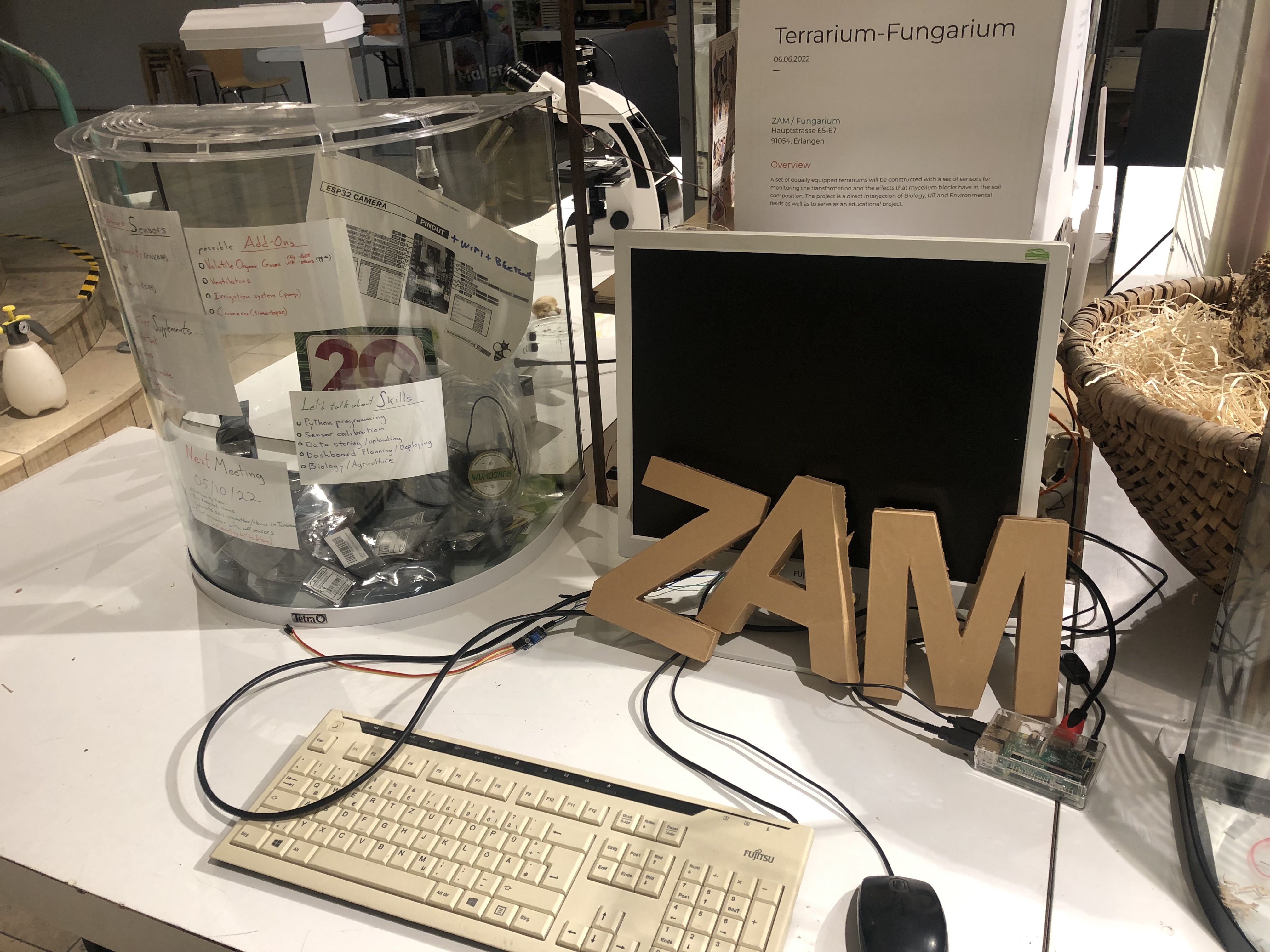
A set of equally equipped terrariums will be constructed with a set of sensors for monitoring the transformation and the effects that mycelium blocks have in the soil composition. The project is a direct interjection of Biology, IoT and Environmental fields as well as to serve as an educational project.
This project will allow an involvement and collaboration across several of the workshops in ZAM such as
Goals
Specifications
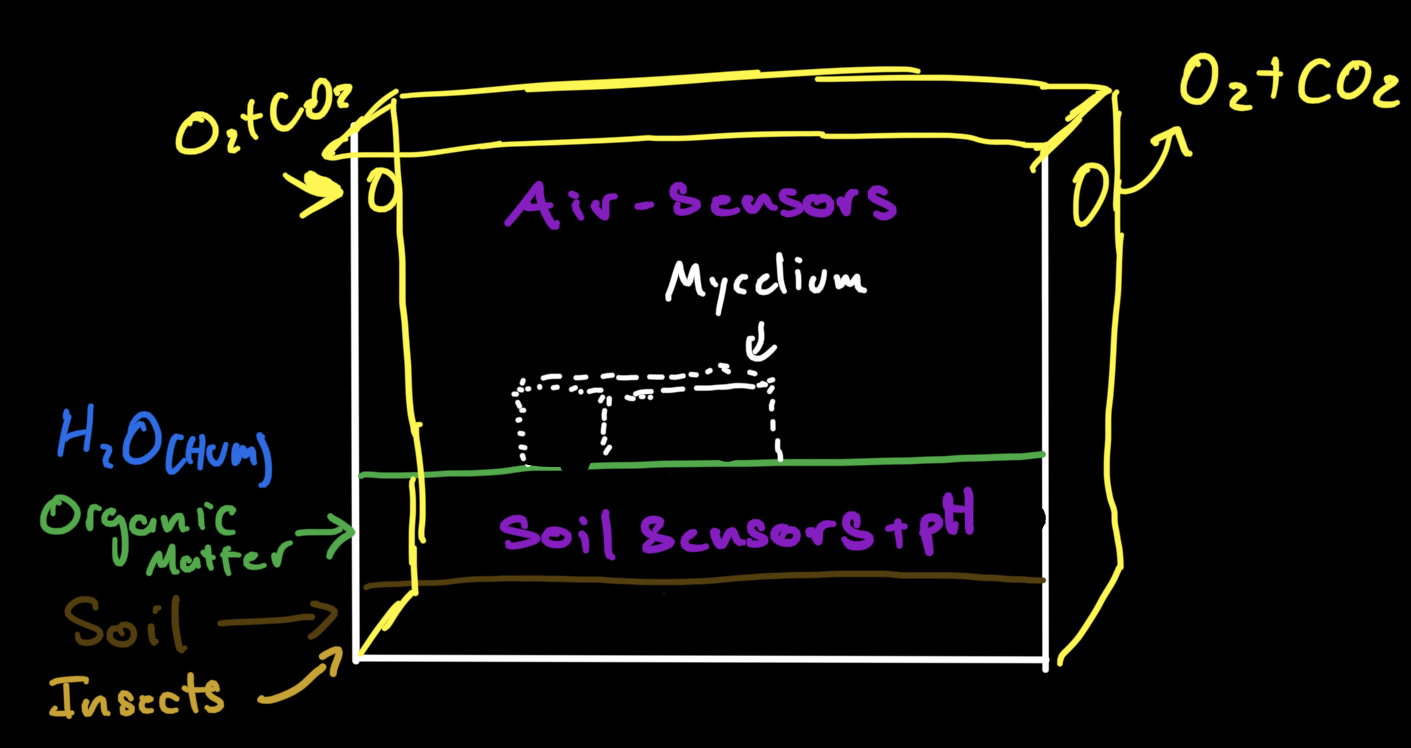
The beginning of the projects starts by building 3 terrariums and looking at the available volume. The conditioning of the terrariums has to be equal:
Monitoring
The monitoring of the decomposition of the mycelium will be done optically using a camera. In the case of the effects that it has on the soil, those will be correlated to the concentration of different gasses in the atmosphere (air) and within the soil (buried). It is important to monitor consistently and to keep transparency in the handling of the data. We will specifically monitor the following:
The data acquisition will be hourly and for as long as the mycelium block takes to become compost (200 days perhaps).
Conditions
In order to emulate as much as possible the conditions outside, a set of fans will keep the air flow and humidity controlled. Likewise, the amount of water spayed weekly will be controlled.
The Baseline scenario: Has no mycelium in it and it allows us to see the current status of soil.
The Soil-Enhancing scenario: The mycelium is intentionally spread across a surface with the intention of using its properties to enhance the soil
The Trashed scenario: The mycelium is left there without an intentional purpose, it hopes to emulate a leftover package.
Raspberry pi Interphase
This IoT section of the project is the most exciting.
The interphase will serve for the following purposes:
Work Breakdown Structure
The project is broken in 3 main section which can run simultaneously and culminate in a final build-up-deploy day:
Milestones
Construction & Conditioning
Well sealed and safely positioned and secured in a window with a display for the street.
Stabilization of same temperature and humidity in the 3 terrariums
Monitoring & Collecting
Detection from all sensors and cameras with a hourly rate
Collecting and storing in SD cards and upload to repository
Analysis and Publishing
Creation of an interactive dashboard which receives real time data and presents graphed values along with their explanation in the biological sense all culminating in a web-accessible dashboard
Event for live streaming of projects and media events, writing open science publication for teaching and research journals.
Participation
Look at the teams and projects
Everyone is welcomed in more than team
Test new fields
Learn and teach
Join the sub_groups
Each group can communicate internally as they prefer
A main repository for the project and ‘official’‘official’ sub-projects will be created
Have fun, create, report the funny moments and the great work
Main project meetings
On selected dates the representatives will gather and assemble the main project.
There will be a celebration of Min 1 broadcast

Join Us!
Update 19.09.2022
We are BACK!!!!
We want to thank first of all to the PCS project initiative for providing a jump-start funds and moral support to continue this project.




This projects intends to show the potential of ZAM and the Fungarium from several perspectives and it aims to be a corner stone of future projects.
It is time time to meet and greet.
On Wednesday 21 of September at 16:00 hrs at ZAM we will hold our first introductory meeting, do not worry, we will have more introductory meetings in the future.
Outline:
Team Introduction
Project description
Budget and limitations
Timeline and objectives
Brainstorming solutions and ideas
Objectives for next meeting
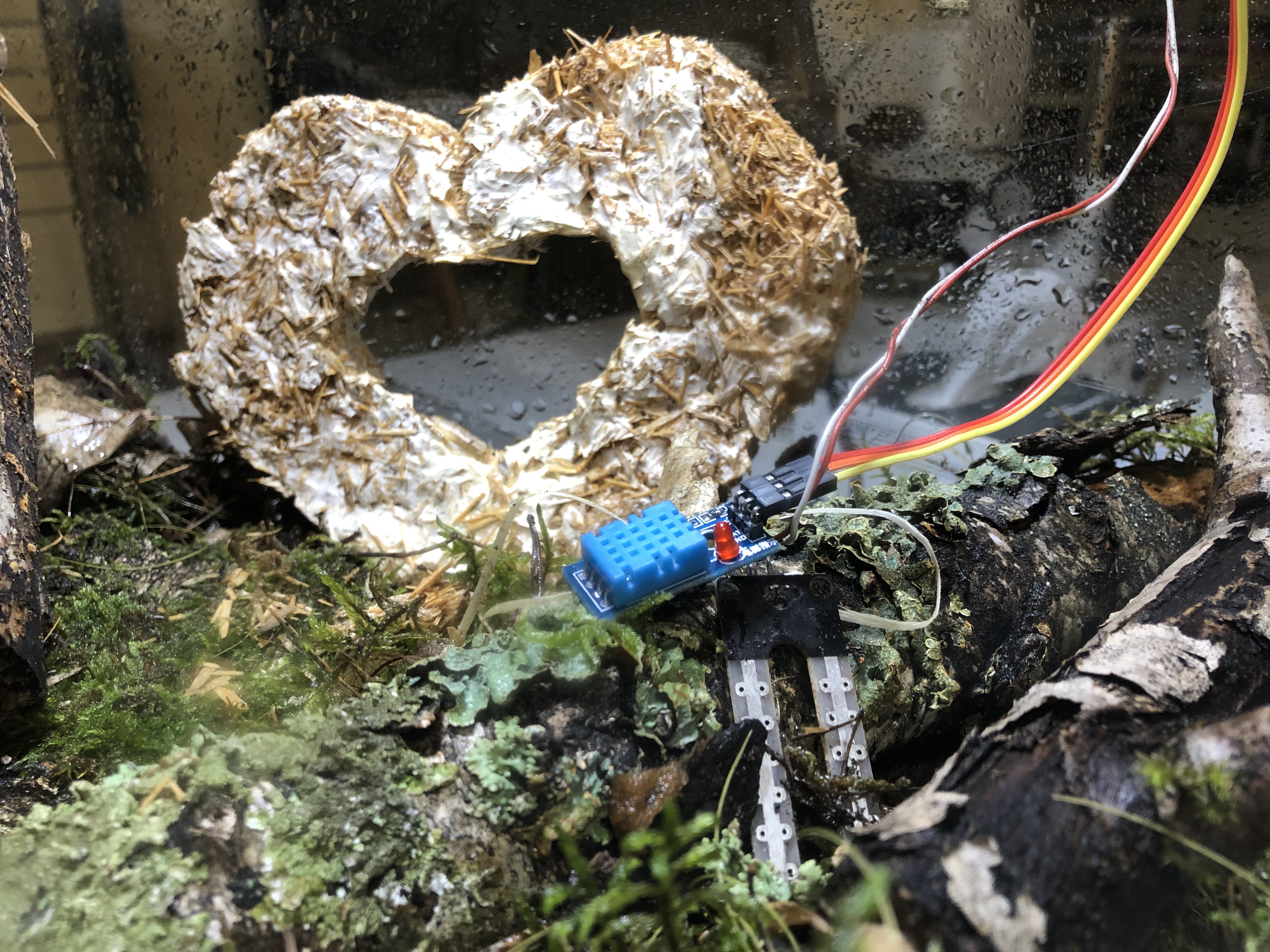
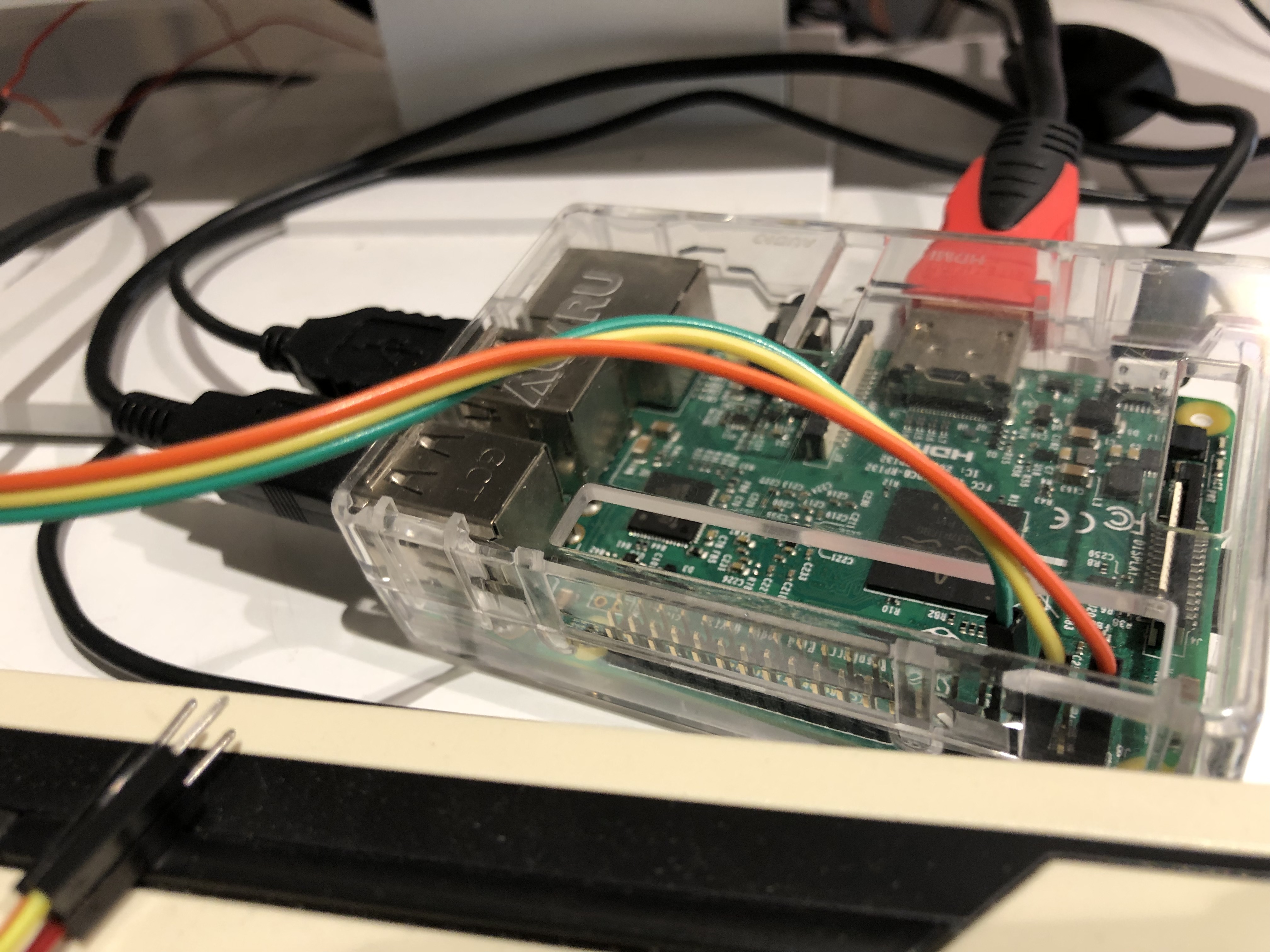
We are always looking for contributions from all sorts. If this inspires you let us know how.
In this project, education, design ,art and sustainable values are mixed with technical skills, IoT set-ups and aims to introduce open-source data for others to use.
See you soon!!
Takes from the last meeting:
- Raspberry
ESP32_CAMCameramodule
Module 15 M
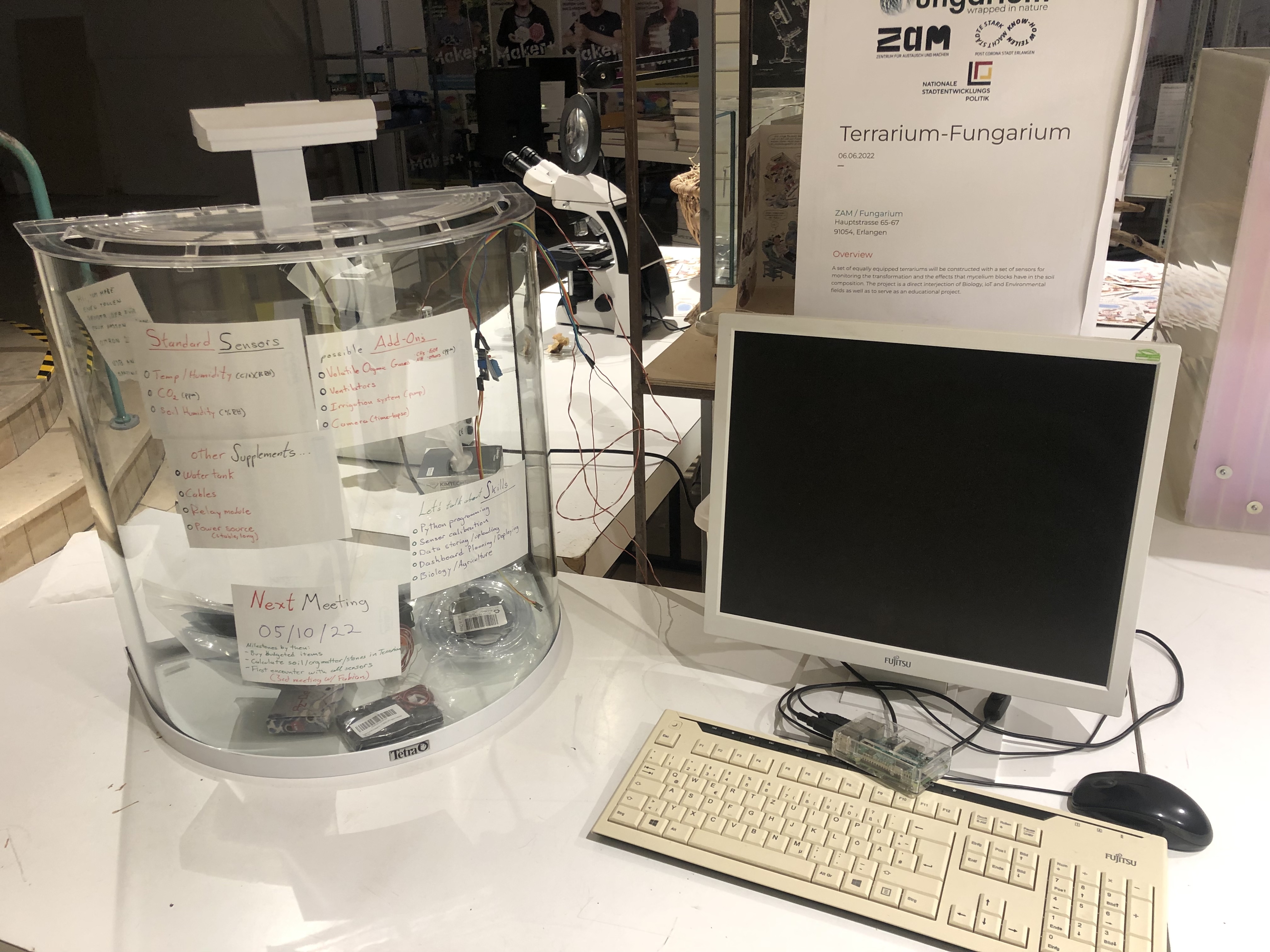
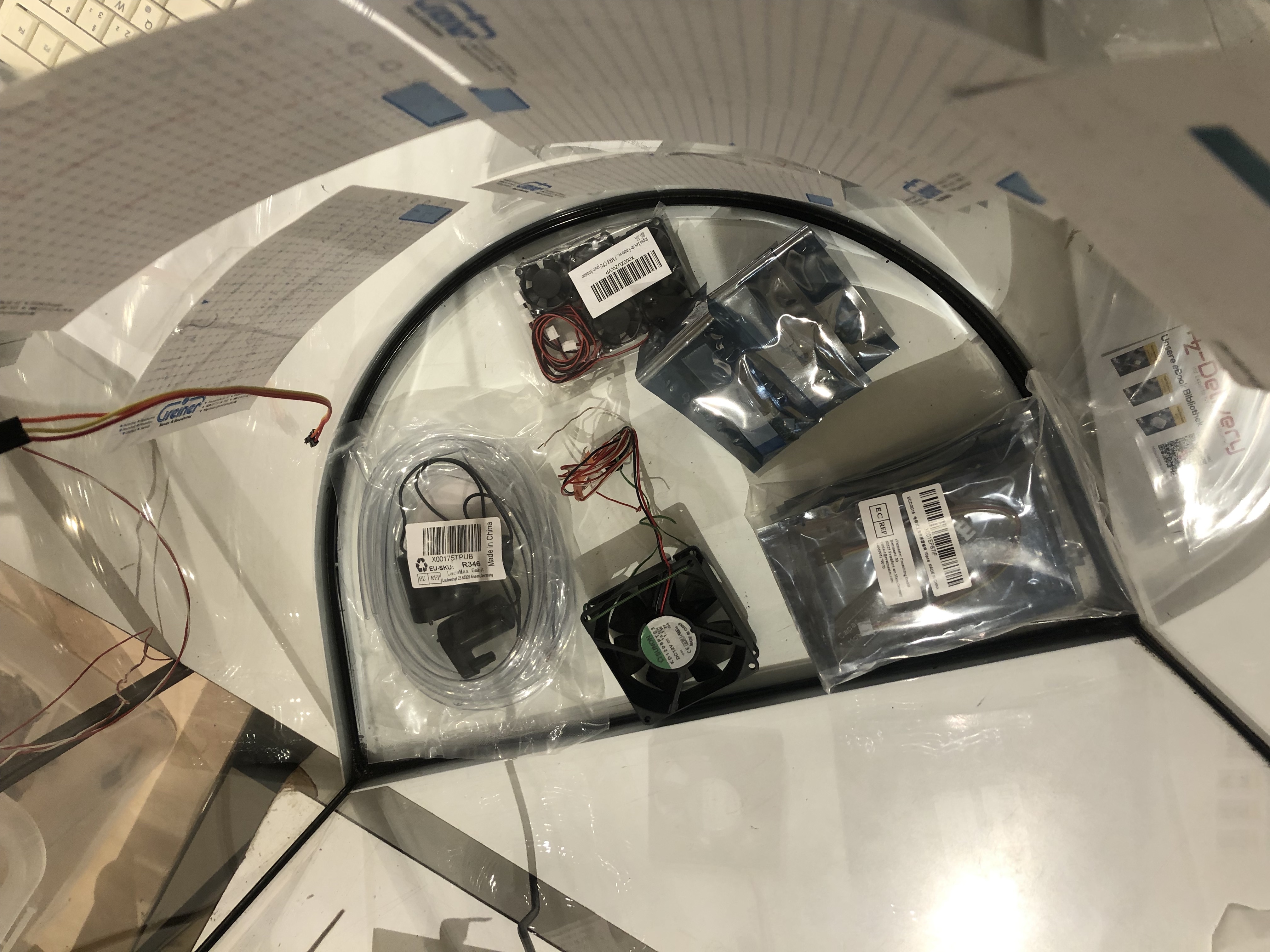
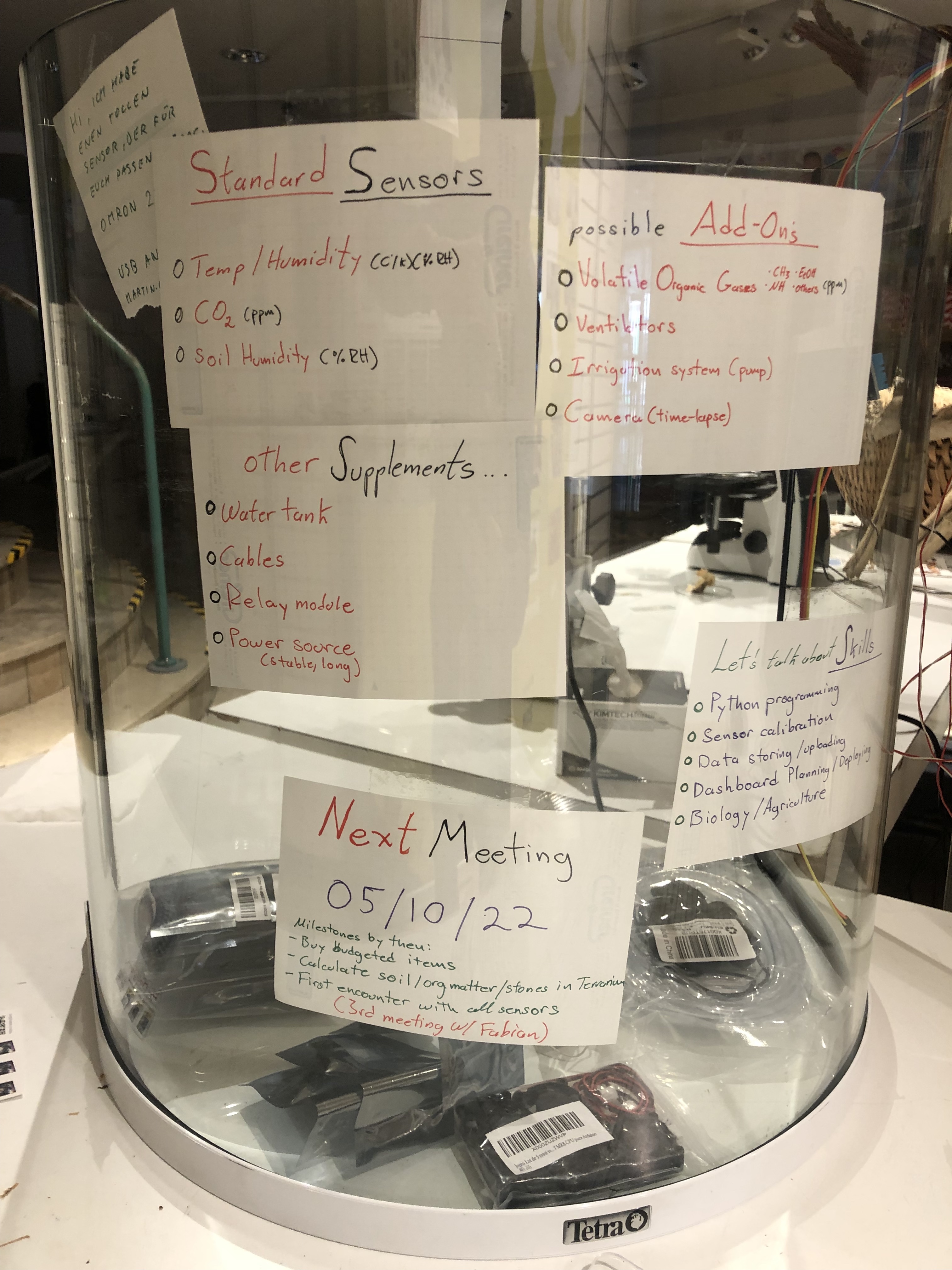
next meeting: 05 / 10 / 2022!!!
We have a new member! Jonas joined the team and he will coding with us the sensors.
There was an understanding and a clearer idea of when to perform the work as well as how to work separately.
Here are the important links for our work.
Signal group:
https://signal.group/#CjQKIGeZQSdzukw4lVI7lIGZqKntJ-PHojXPaXfQw_qaYypdEhAjQwLrDeL7gsuwKKv0JR6M
GitHub Repository
https://github.com/rubcaspac60/Fungarium-Terrarium
As we need to accommodate the information to be available for everyone, the members of the project can work on different versions and experiment freely on the codes. We can always recover the working versions and continue from where we left last week.
next meeting on 19.10.2022 18 to 21 hrs @ ZAM's Biolab.
Agenda:
Takes from the last meeting 19.10.2022:
CHANGE OF PLANS!!!
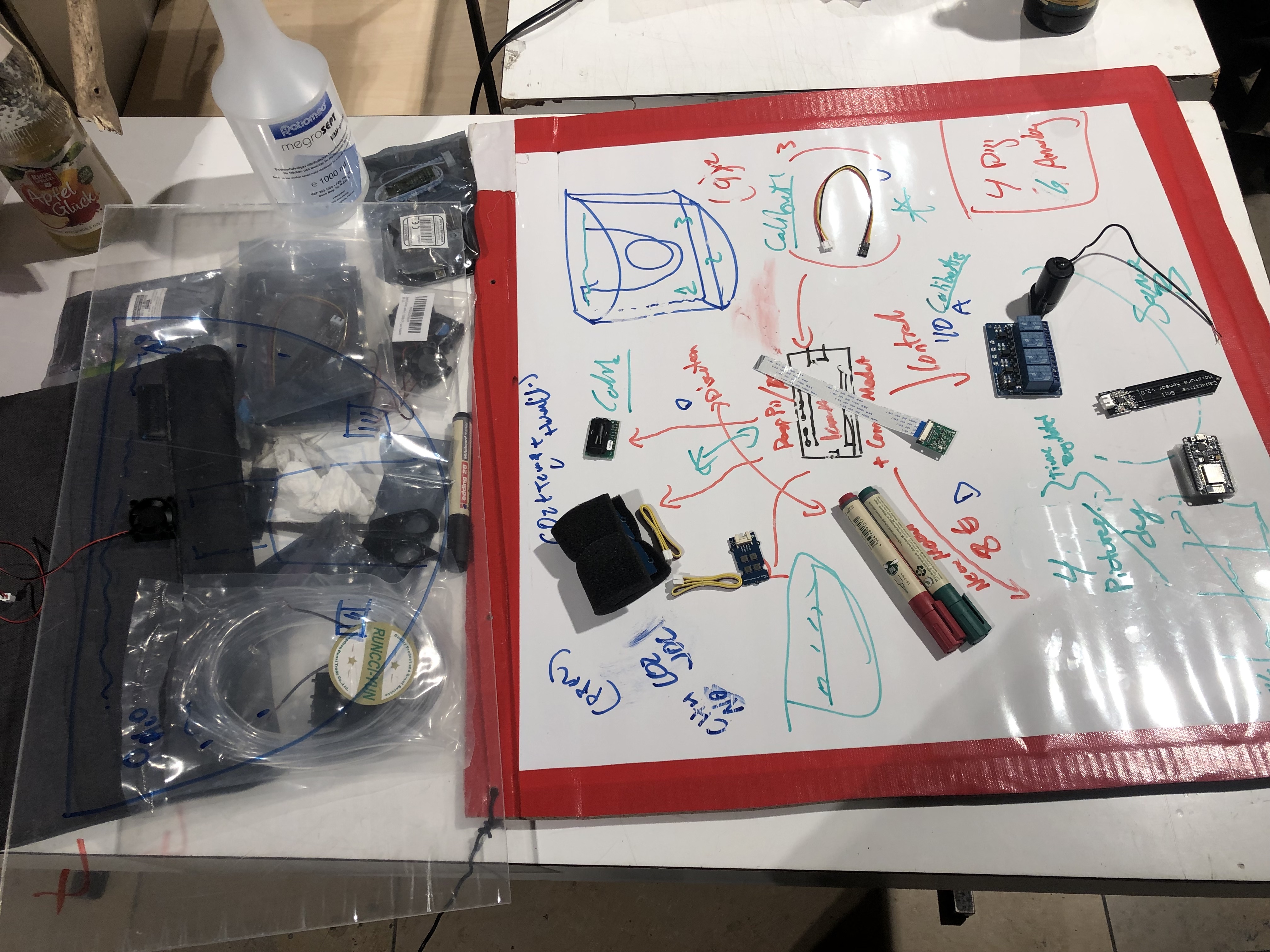
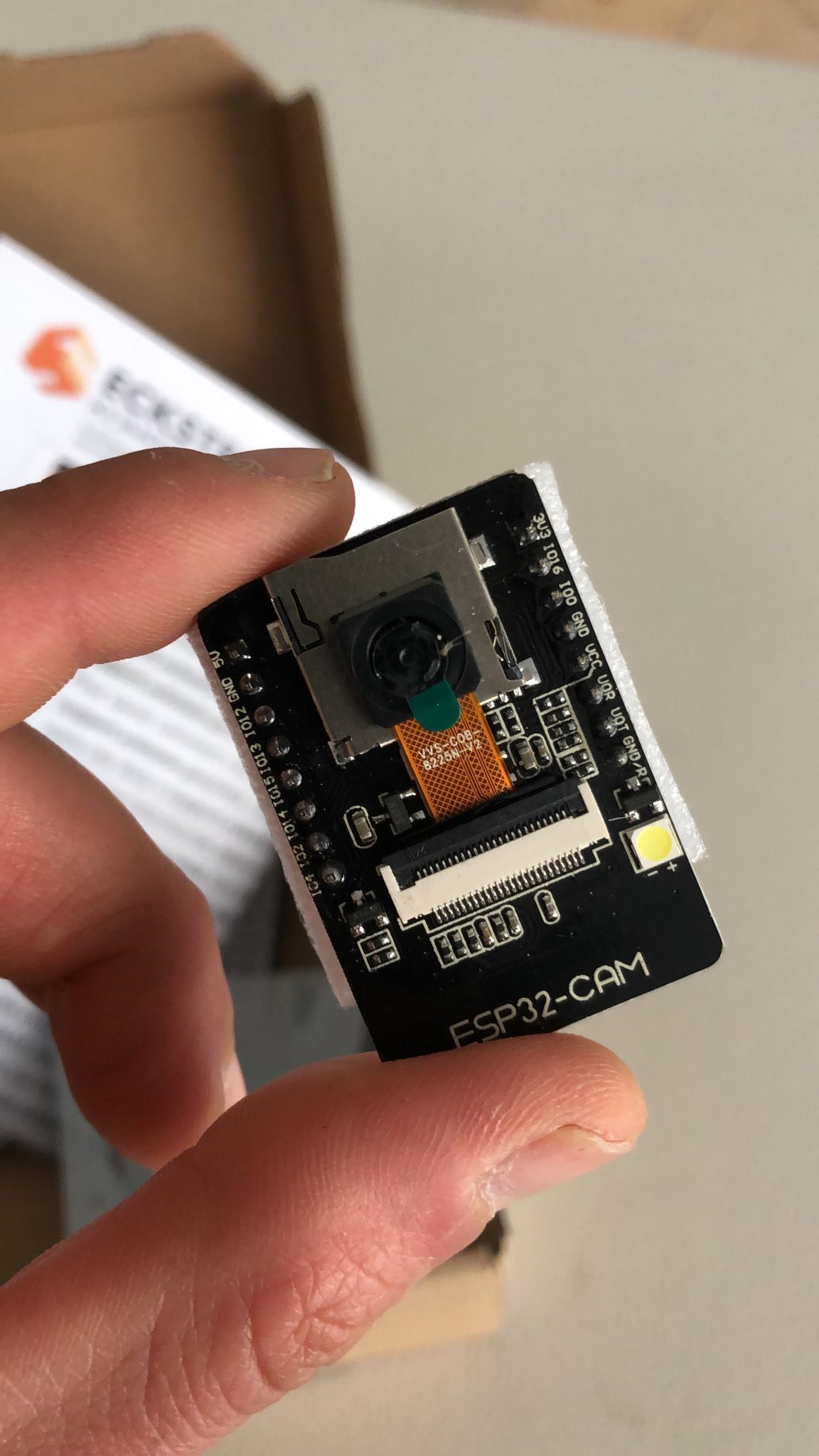
By looking at the agreed design, we have changed the design and decided to use a ESP32_CAM module as a micro controller.
Our 3 MCU-Wifi modules and the extra camera modules will be used for controlling lighting, relays and other external additions to the terrarium exposition and display.
We have designed the terrarium to make use of all of the available pins in the micro controller as well as having a uniquely design cover which will sit all the installations.
We have distributed the work and we begin to work...


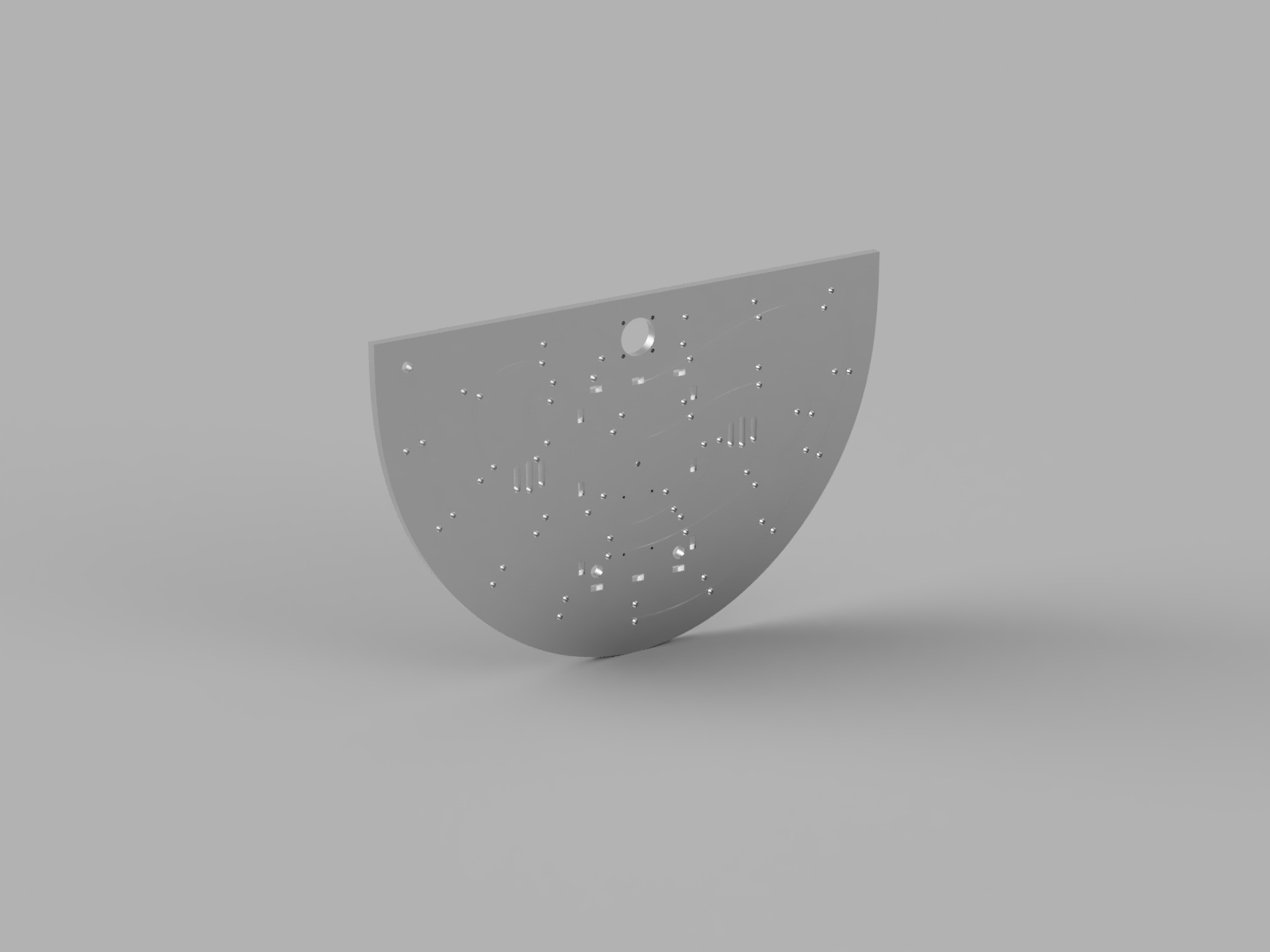
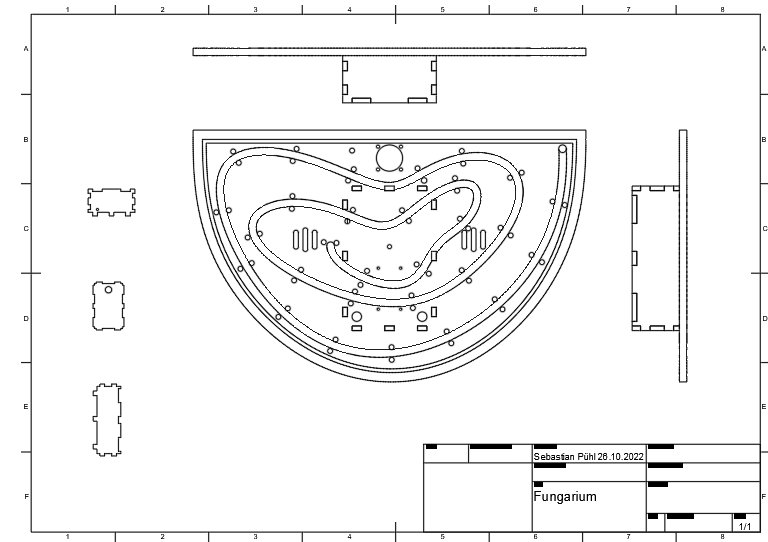
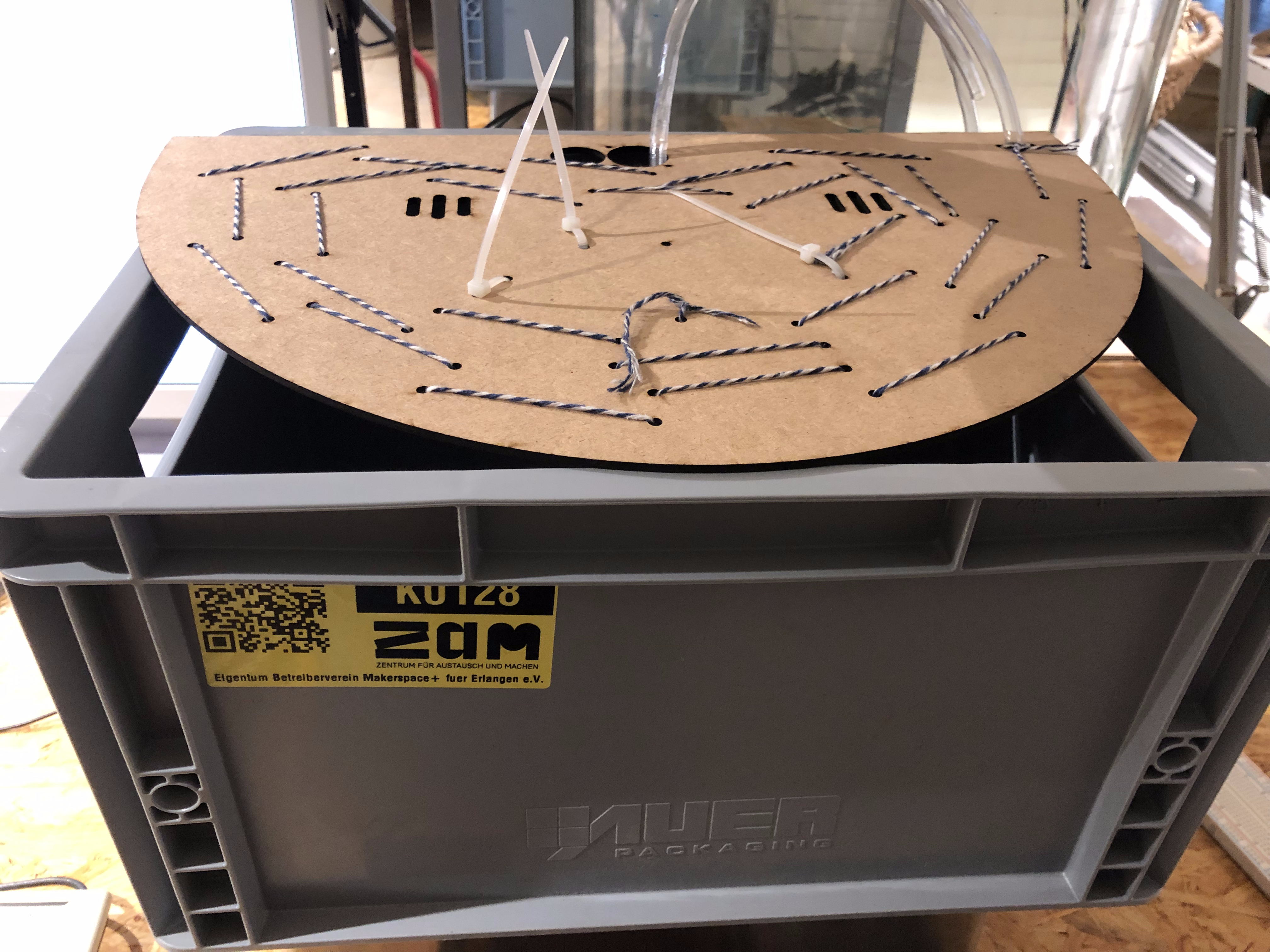
Design the lid for the terrarium
First, a CAD had to be created that met all the requirements such as all the holes for the fan, water supply, a mark for the hose that makes the water rain. Holes also had to be made for the cable ties that hold the hose. A box for the electrical components was also created. Ventilation slits and passive cooling were of course also included
Update for 22/11/2022
So much has been going on on the last 3 weeks.
We have a new place in ZAM We are currently developing software
We would like to try the first terrarium fully functional close to the end of year.
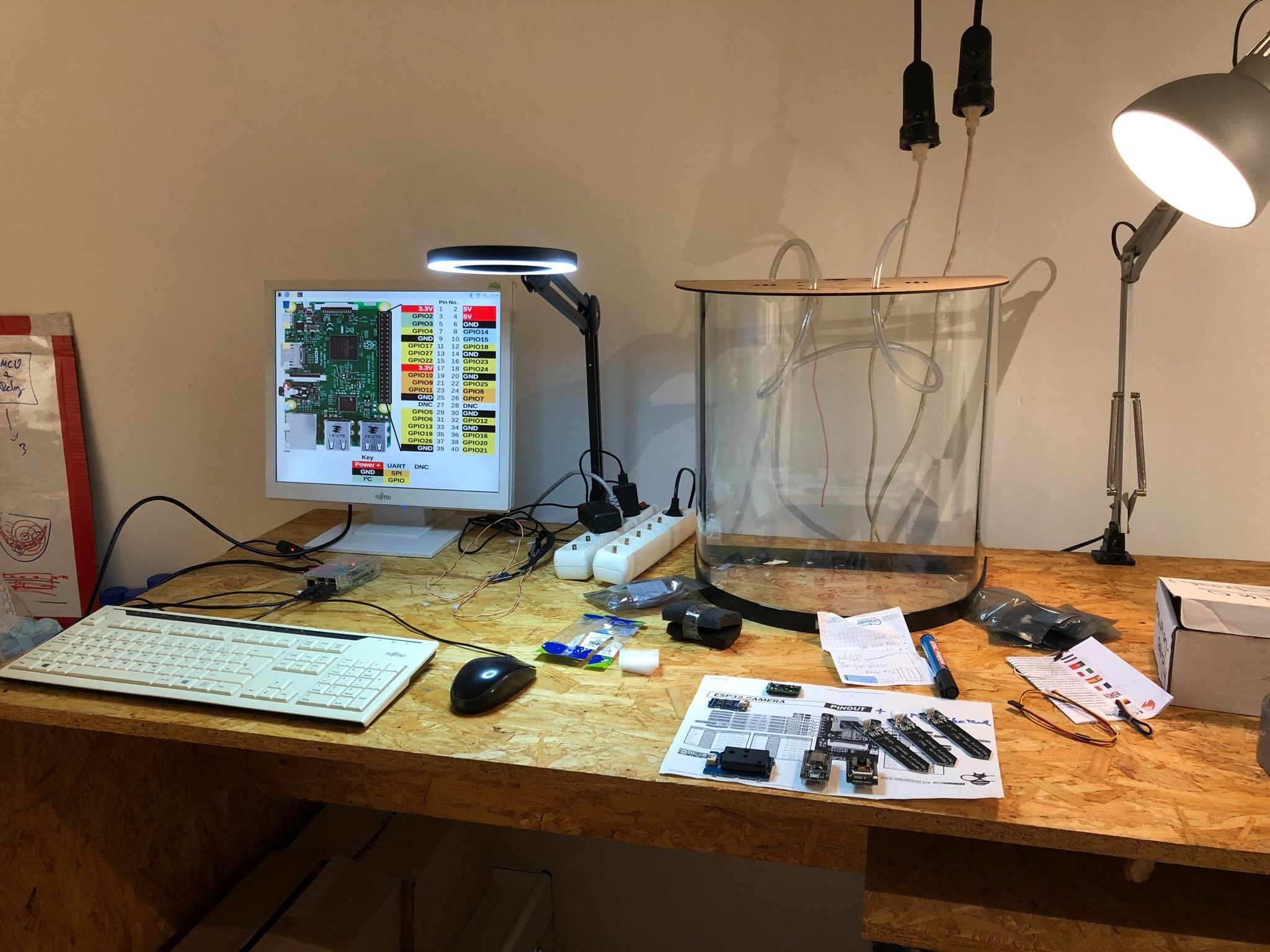
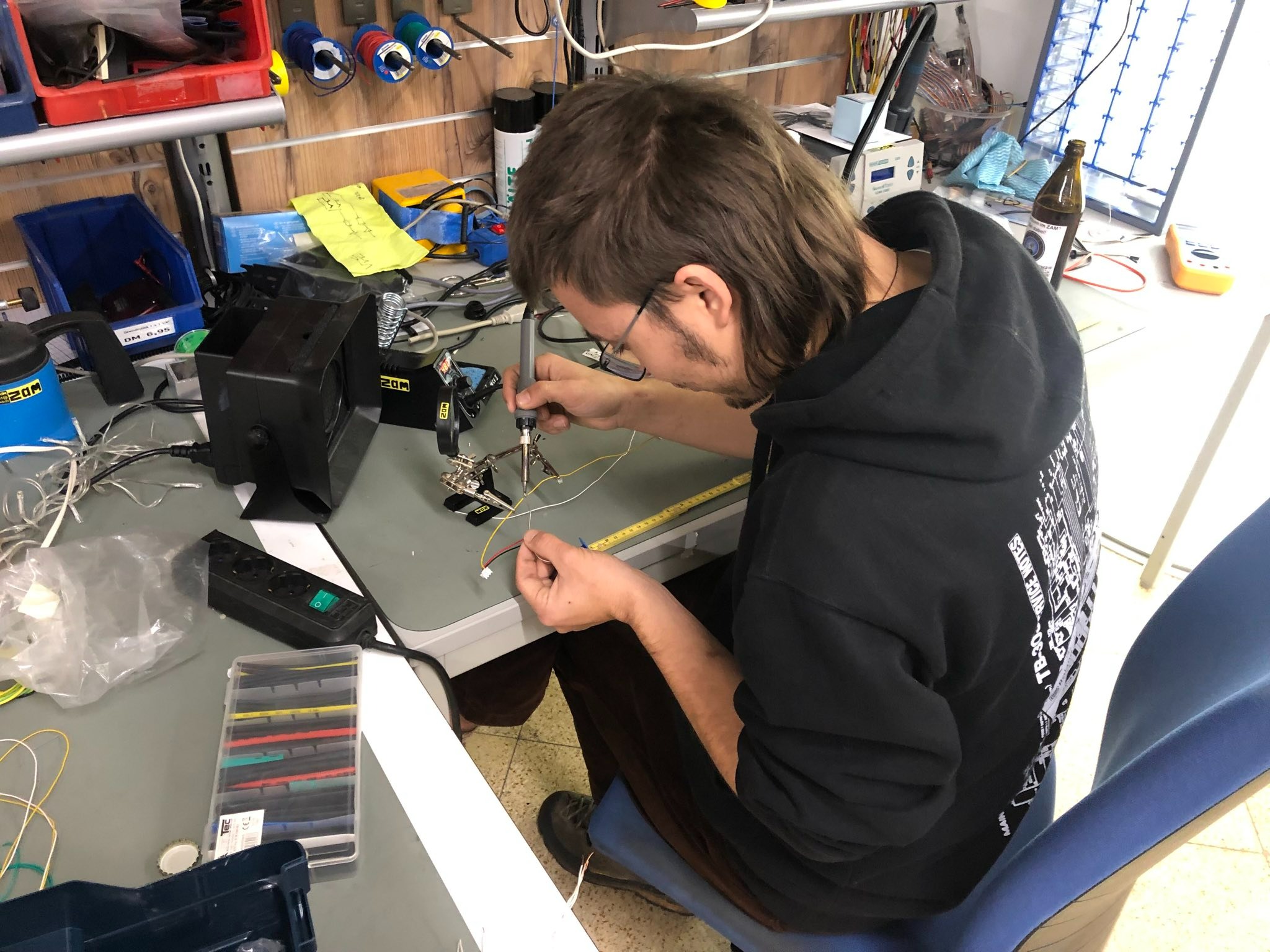
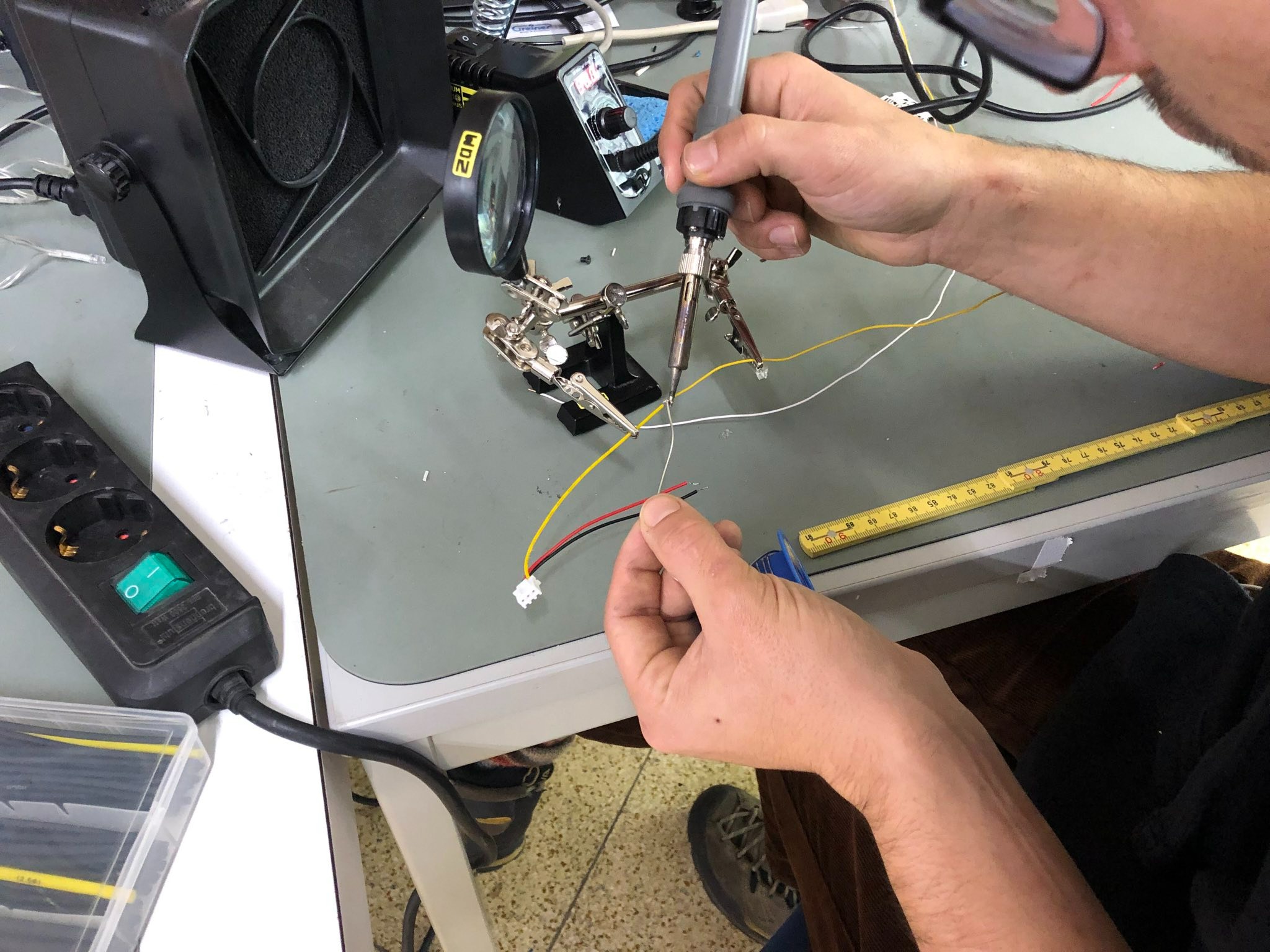
Not all pumps are the same
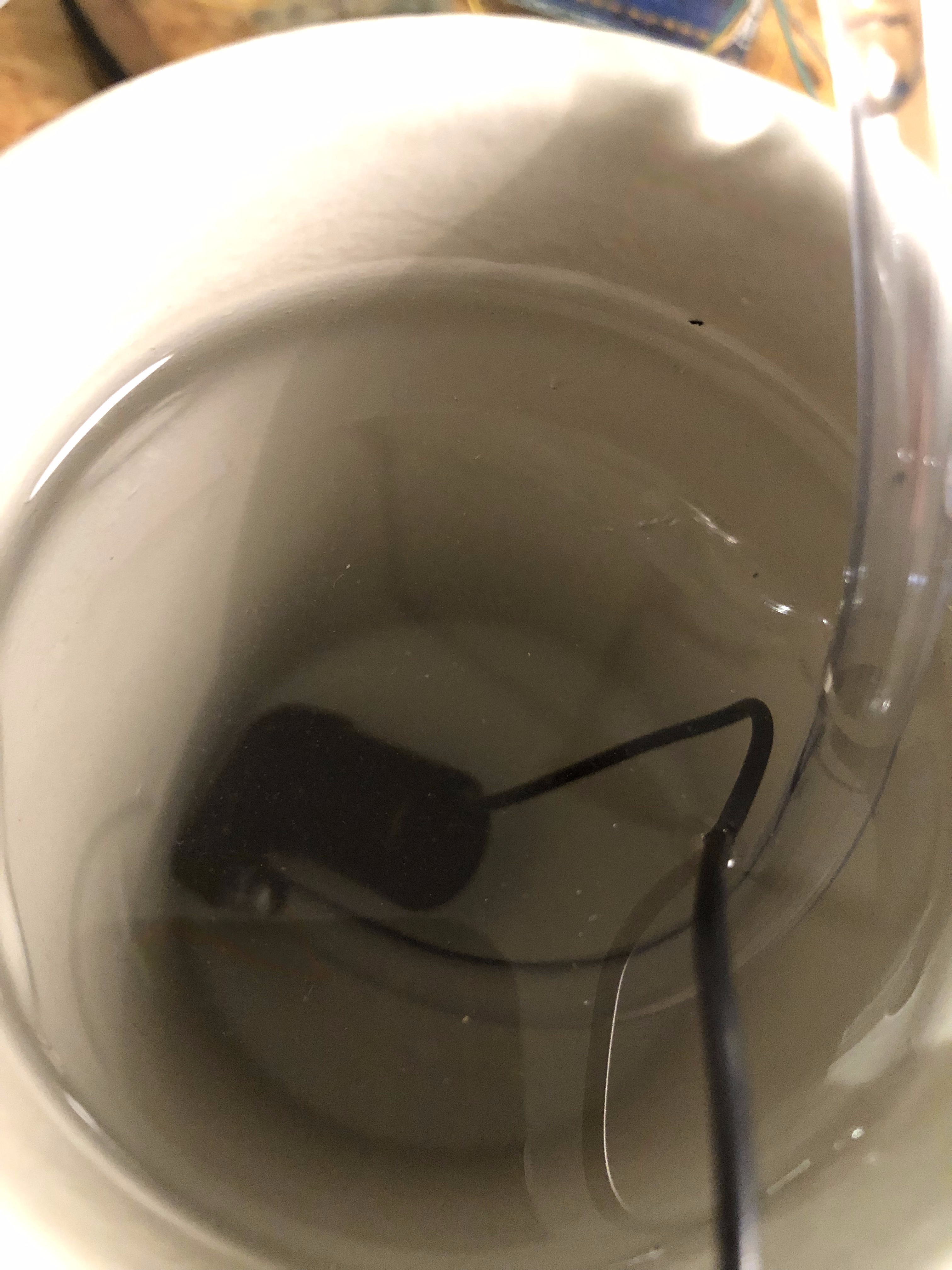
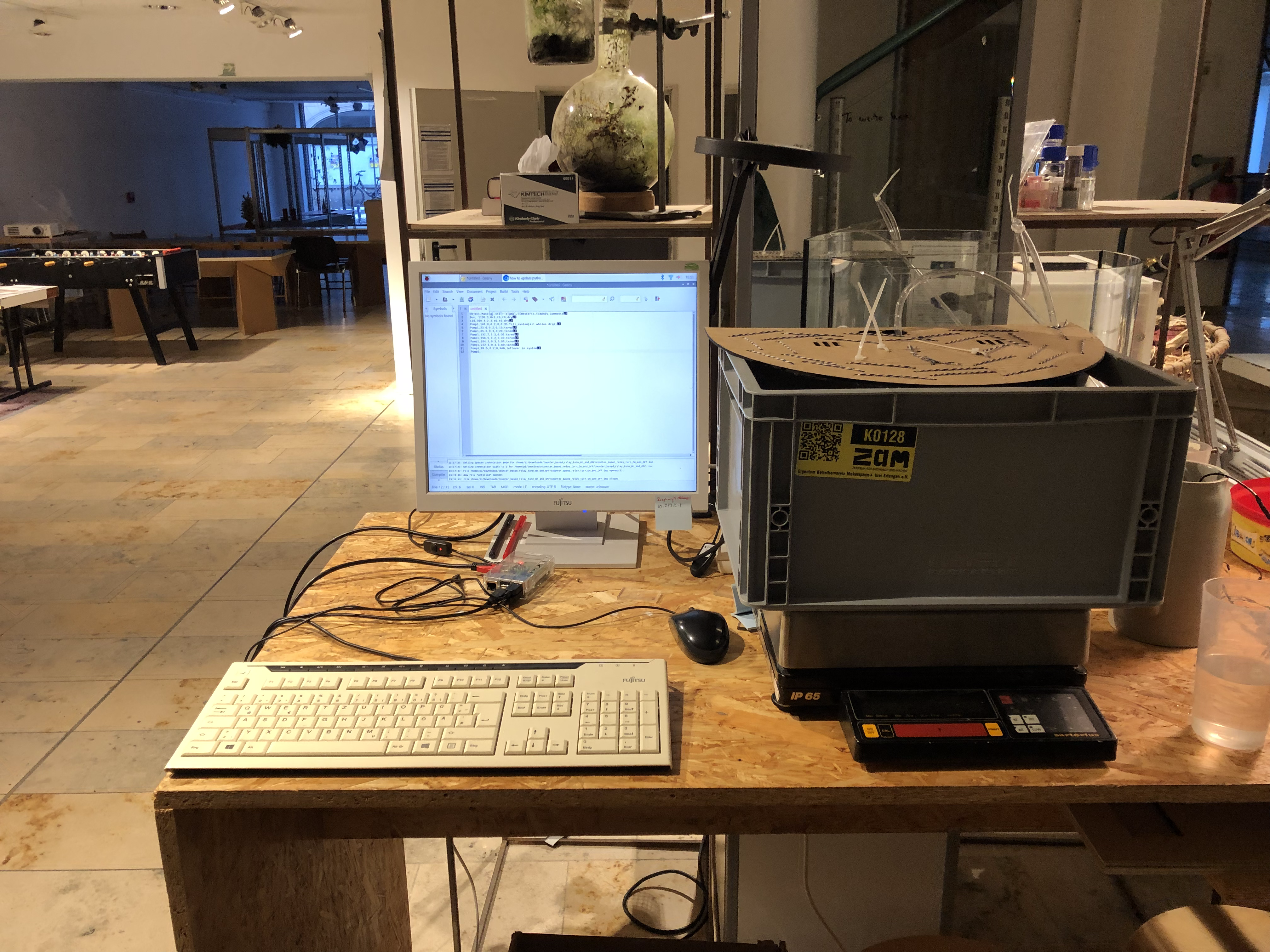
The aim of the experiment is to have all the terrariums under the same conditions. This means same amount of water. For this reason we looked at the performance of each pump. In this way, we could place them strategically and power them for a certain time to ensure the same volume is pumped.
The results of the experiments look like this.
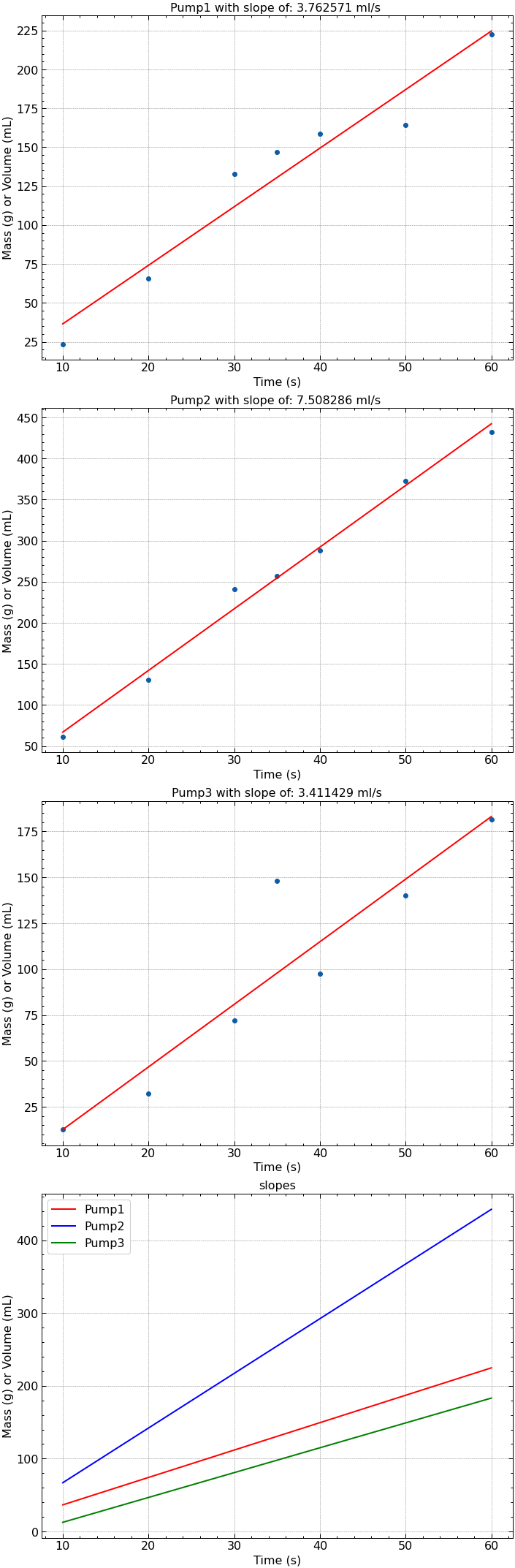
It seems that two pumps 1 & 3 are quite similar, while pump 2 is stronger.
This should be considered when placing the pumps in the final arrangement.
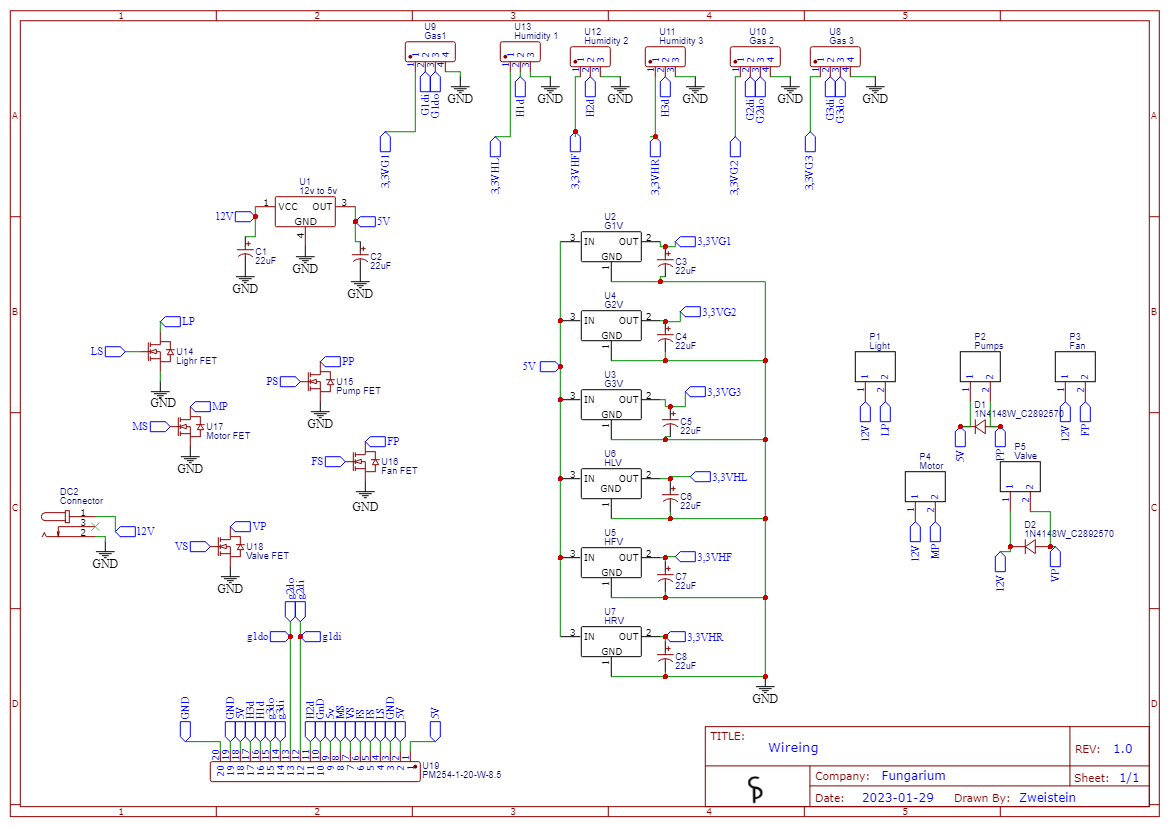
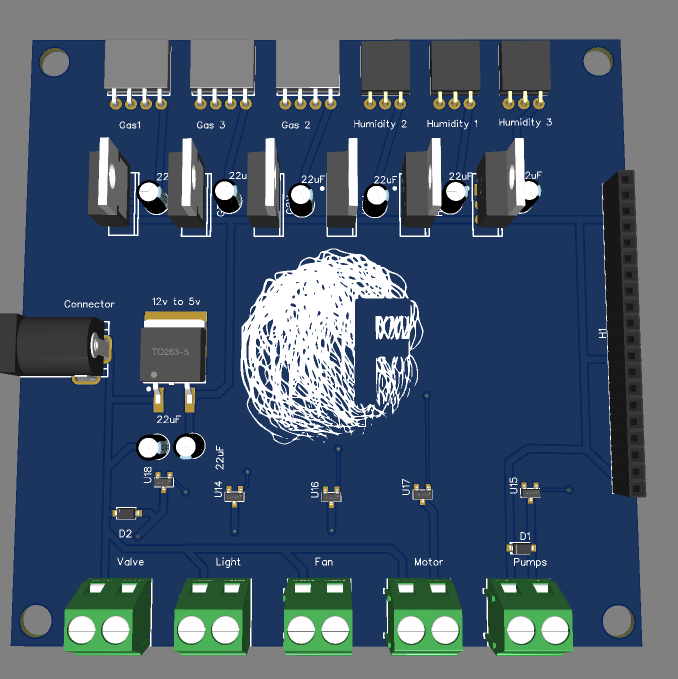
Designe of the PCB for the power distribution
To collect all the date power has to be brought to all the sensors, in our case 3,3V to every sensor, and that as acurrat as possible. than there are the pumps that need 5 V and the fan with his 12V.
Yes we could buy a power supply for all the different voltages, but why not make a PCB that does the work.
This is the final
PCB-Schematic 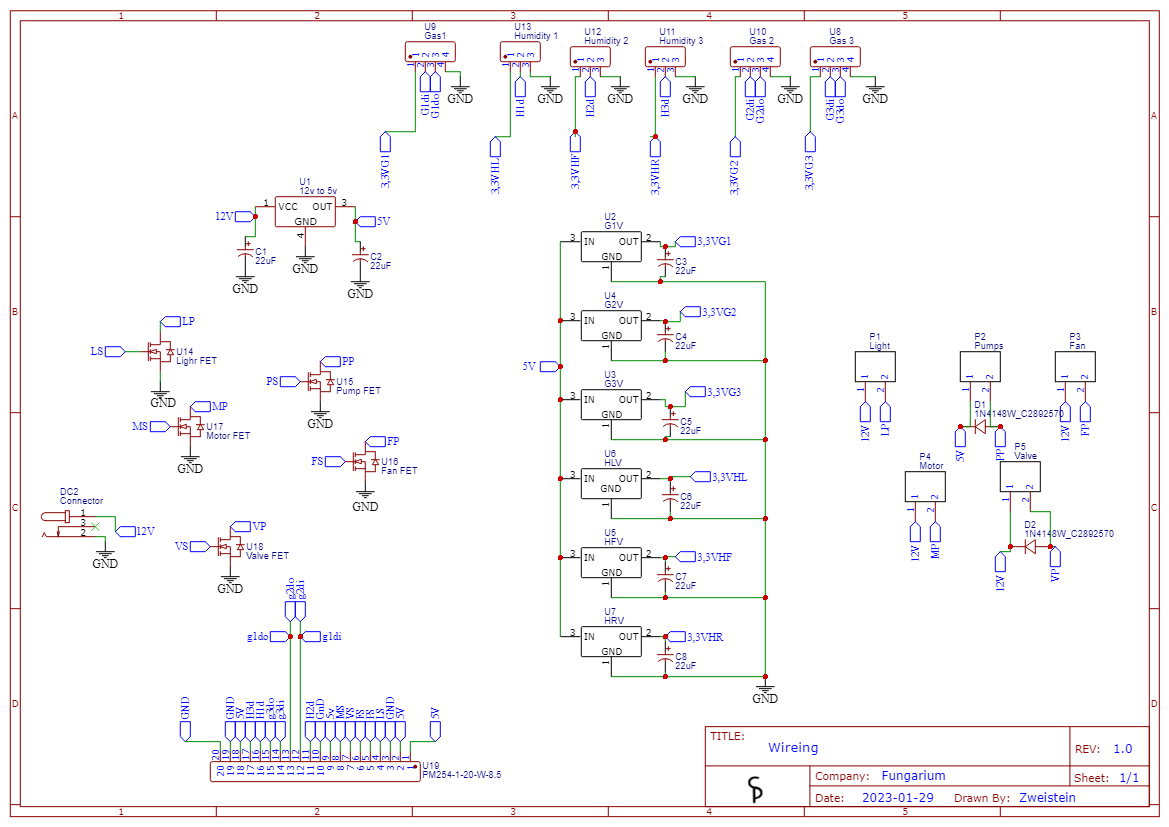
And the 3d Rendering
And a real Foto
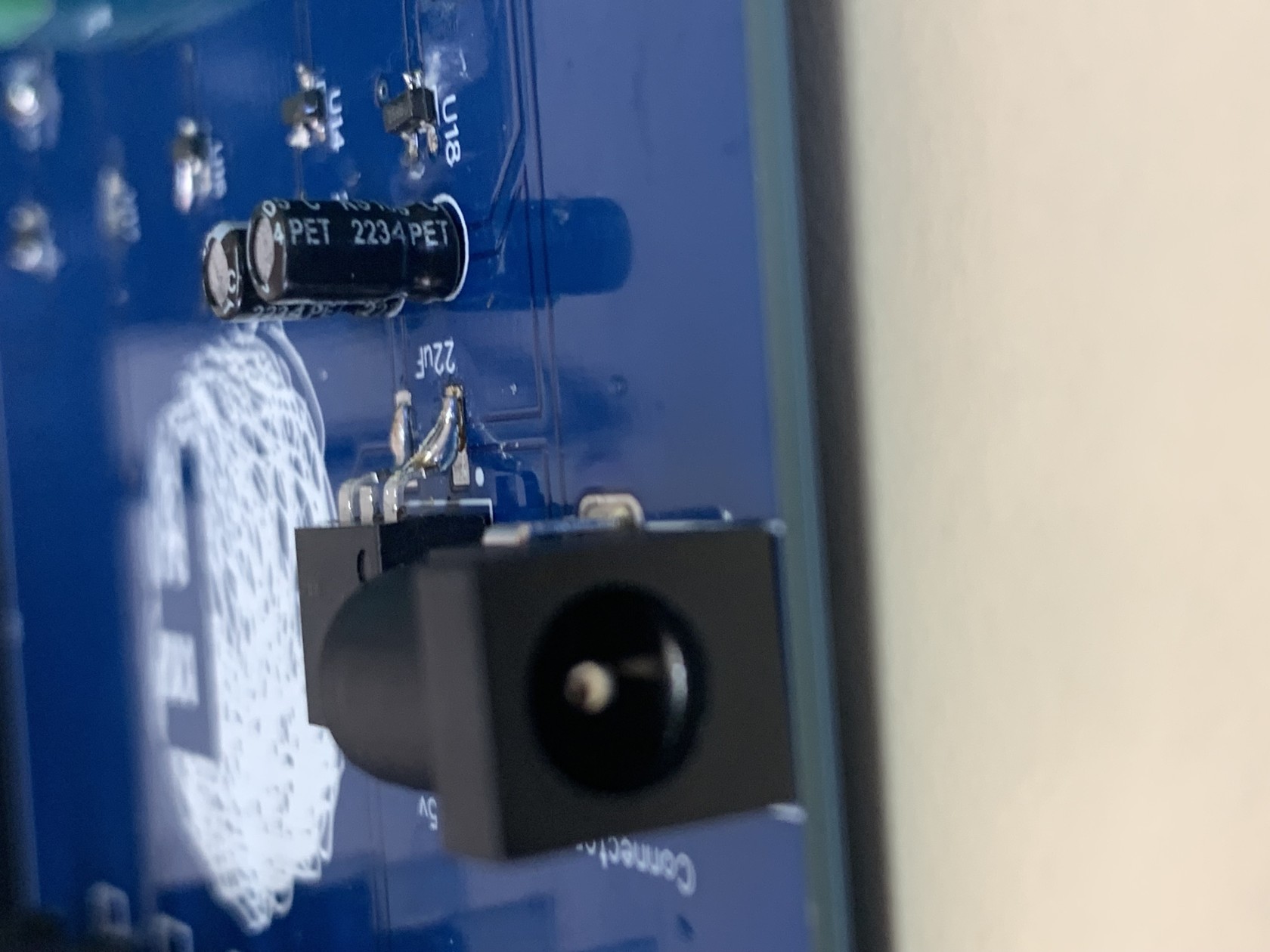
falls das jemand sieht könnte bitte jemand das bild drehen und dann diesen Text löschen